
Bunion Surgery in Poland
MedTrip Poland helps patients from Ireland access private orthopaedic consultations and selected foot surgery procedures through trusted clinic partners in Poland.
One of the procedures available is bunion surgery, also known as hallux valgus correction. Treatment is planned individually, according to the severity of the deformity, symptoms and the structure of the foot.
Anaesthesia
The type of anaesthesia depends on the procedure, the patient’s health and the surgeon’s recommendation.
Procedure
The length and surgical technique vary according to the type and severity of the bunion deformity.
Recovery
Recovery is gradual. Swelling can remain for several months, even after walking and normal activities have improved.
What Is a Bunion?
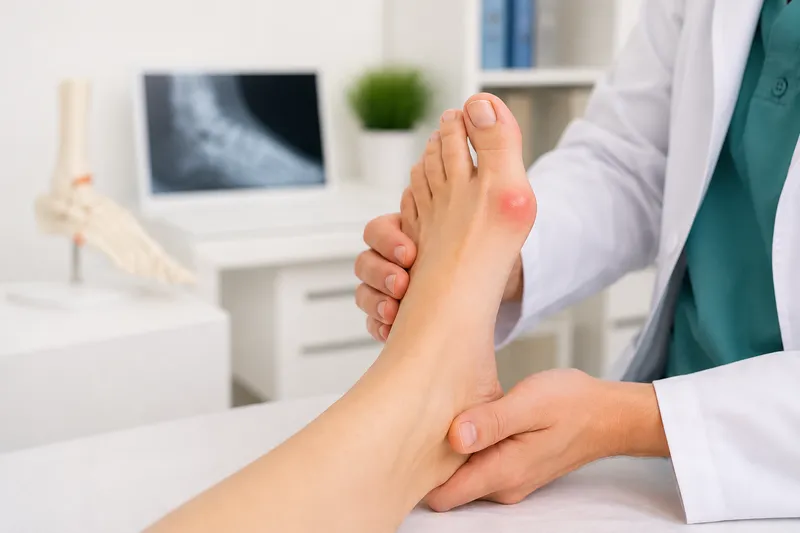
A bunion is a deformity affecting the joint at the base of the big toe. The big toe gradually moves towards the smaller toes while the joint becomes more prominent on the inner side of the foot.
The medical name for this condition is hallux valgus. Although the visible bump is often the most noticeable feature, a bunion involves changes in the alignment of the bones and joint rather than simply an isolated growth of bone.
Some bunions cause few or no symptoms. Others can lead to pain, swelling, irritation from footwear, reduced joint movement or difficulty walking comfortably.
How Can a Bunion Affect the Foot?
Symptoms vary between patients and do not always correspond to the visible size of the bunion. A specialist assessment is needed to determine whether treatment may be appropriate.
Visible prominence
A noticeable bump may develop at the base of the big toe on the inner side of the foot.
Pain and tenderness
Pain may occur around the joint, particularly when walking or wearing close-fitting footwear.
Swelling or irritation
The skin over the joint may become red, inflamed, sore or irritated by repeated pressure.
Toe misalignment
The big toe may move towards or overlap the second toe as the deformity progresses.
Corns and hard skin
Areas of hardened skin or corns can develop where the toes or footwear repeatedly rub against the foot.
Reduced movement
Stiffness or restricted movement of the big toe joint may make walking and everyday activities less comfortable.
Can Bunions Be Managed Without an Operation?
Not every bunion requires surgery. When symptoms are mild, non-surgical measures may help reduce discomfort and pressure around the affected joint.
These measures do not normally correct the existing bone alignment, but they may help some patients manage their symptoms.
- Wearing wider shoes with sufficient room for the toes.
- Avoiding footwear that places pressure on the bunion.
- Using protective bunion pads where appropriate.
- Considering insoles or orthotics following professional advice.
- Using suitable pain-relieving measures recommended by a clinician.
- Adjusting activities that repeatedly aggravate the joint.
When May Bunion Surgery Be Considered?
Surgery may be discussed when the bunion causes persistent pain or functional problems and non-surgical treatment has not provided sufficient relief.
- Ongoing pain affecting walking or daily activities.
- Difficulty finding comfortable and suitable footwear.
- Recurring inflammation or irritation around the joint.
- Progressive deformity or pressure on the other toes.
- Restricted movement of the big toe joint.
- Symptoms that continue despite appropriate conservative care.
Surgery Is Not Based on Appearance Alone
A bunion operation is generally intended to improve function, reduce pain and correct problematic alignment. The decision should not be based only on the cosmetic appearance of the foot.
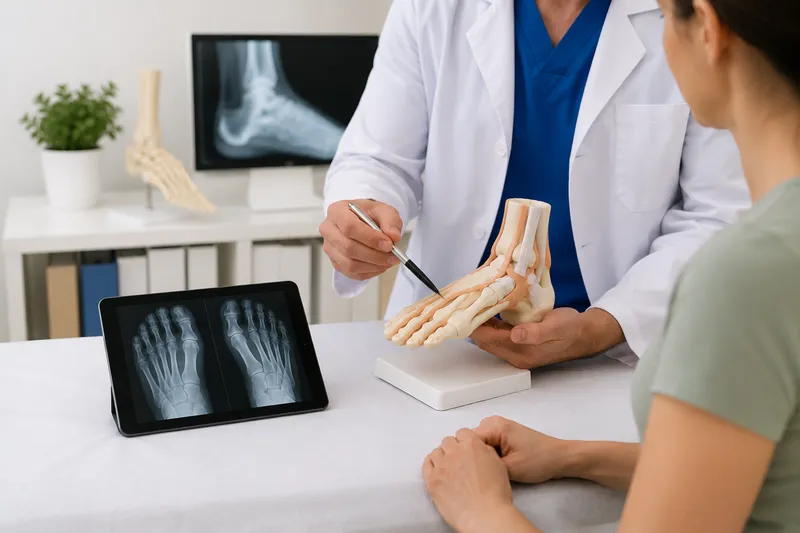
Before recommending treatment, the orthopaedic surgeon assesses the symptoms, medical history, joint movement, foot alignment and the effect of the condition on everyday life.
Weight-bearing X-rays or other examinations may be requested to measure the deformity and help select an appropriate surgical technique.
How Does Bunion Surgery Work?
There is no single operation suitable for every bunion. The chosen procedure depends on the degree of deformity, joint condition, bone alignment, symptoms and the surgeon’s clinical assessment.
Orthopaedic consultation
The surgeon reviews the patient’s symptoms, medical history, mobility, footwear problems and previous treatment.
Clinical examination and imaging
The foot is assessed carefully. Suitable X-rays or other diagnostic tests may be required to evaluate the alignment of the bones and joint.
Selection of the surgical technique
The surgeon recommends a procedure appropriate to the individual deformity. More than one corrective step may be performed during the same operation.
Correction and stabilisation
The operation may involve repositioning bone, correcting the joint alignment, balancing surrounding soft tissues and stabilising the correction where necessary.
Post-operative care
Patients receive individual instructions concerning dressings, footwear, weight-bearing, medication, follow-up appointments and return to normal activities.
Which Technique May Be Used?
The names below describe general categories of bunion correction. They do not indicate which operation will be suitable for a particular patient.
Osteotomy
One or more bones may be carefully cut and repositioned to improve the alignment of the big toe and forefoot.
Soft-tissue correction
Tight or imbalanced tissues around the big toe joint may be adjusted as part of the overall correction.
Joint stabilisation
In selected cases involving significant deformity, instability or joint damage, a stabilising or fusion procedure may be advised.
Recovery After Bunion Surgery
Recovery differs between patients and surgical techniques. The treating clinic will provide instructions specific to the operation performed.
Rest and elevation are usually important to help control swelling. Walking may be restricted, and patients may need a special post-operative shoe or crutches.
The wound and dressing need to be protected. A follow-up appointment may be arranged to check healing and review further instructions.
Weight-bearing and activity are increased gradually in accordance with the surgeon’s advice. Suitable roomy footwear may be introduced when it is safe.
Return to work, driving and sport varies considerably. Swelling can remain for several months while the bones and soft tissues continue to heal.
Planning Bunion Surgery in Poland
Foot surgery requires careful travel planning. The appropriate length of stay depends on the surgical technique, medical assessment, post-operative mobility and the clinic’s follow-up requirements.
Patients should not book return flights until the proposed treatment plan and recommended stay have been confirmed by the clinic.
- Initial review of available medical information.
- Arranging a consultation with a suitable specialist.
- Clarification of the proposed treatment pathway.
- Information concerning clinic appointments.
- Assistance with local hotel and transfer options where needed.
- Support with communication before the planned visit.
What information may be requested?
To allow the clinic to assess an enquiry, patients may be asked to provide:
- A brief description of symptoms and their duration.
- Details of previous treatment or consultations.
- Recent X-ray reports or other diagnostic results, if available.
- A list of current medication and relevant medical conditions.
- Clear photographs of the affected foot, where requested.
Why Consider Bunion Surgery in Poland?
Through trusted clinic partnerships, MedTrip Poland helps patients living in Ireland access private specialist consultations and selected surgical procedures in Poland.
Depending on individual circumstances, patients may benefit from access to experienced specialists, modern private medical facilities, English-speaking support and a clearly explained treatment pathway.
MedTrip Poland can help coordinate communication with the clinic and provide practical assistance with appointments, local transfers and suitable accommodation options.
Bunion Surgery FAQ
Are bunions and hallux valgus the same condition?
Yes. “Bunion” is the common English term, while “hallux valgus” is the medical term used to describe the characteristic deformity of the big toe joint.
Does every bunion need surgery?
No. Bunions that are not painful or do not interfere with normal activities may not require an operation. Surgery is usually considered when symptoms remain significant despite appropriate non-surgical treatment.
Can a bunion be removed without correcting the toe alignment?
A bunion is more than an isolated bump. It involves altered alignment of the bones and joint. For this reason, treatment normally focuses on correcting the underlying deformity rather than simply removing the visible prominence.
Will I be able to walk immediately after surgery?
This depends on the procedure. Some patients may be allowed limited protected weight-bearing in a special shoe, while others may need stricter restrictions. The surgeon will give individual instructions.
How long will I need to stay in Poland?
The required stay depends on the planned operation, post-operative review and the surgeon’s recommendations. The clinic should confirm this before flights are booked.
How long does swelling last?
Swelling commonly improves gradually and may remain visible for several months. The exact recovery period differs between patients and procedures.
Can both feet be operated on at the same time?
This requires individual assessment. Operating on both feet can make mobility and early recovery more difficult, so the surgeon must decide whether a simultaneous or staged approach is appropriate.
Can I receive HSE reimbursement?
Eligibility for reimbursement depends on the patient’s circumstances, the treatment provided and current HSE Cross Border Healthcare requirements. Patients considering reimbursement should confirm the applicable requirements with the HSE before proceeding.
Would You Like to Ask About Bunion Surgery in Poland?
We will be happy to explain the treatment pathway, answer your initial questions and help you arrange a consultation with one of our trusted clinic partners.
contact@medtrippoland.ie

