
Child Mental Health
When the Screen Becomes Their Whole World
Technology has transformed childhood in remarkable ways. But what happens when smartphones, tablets and computers quietly begin replacing sleep, friendships, outdoor play and emotional wellbeing?
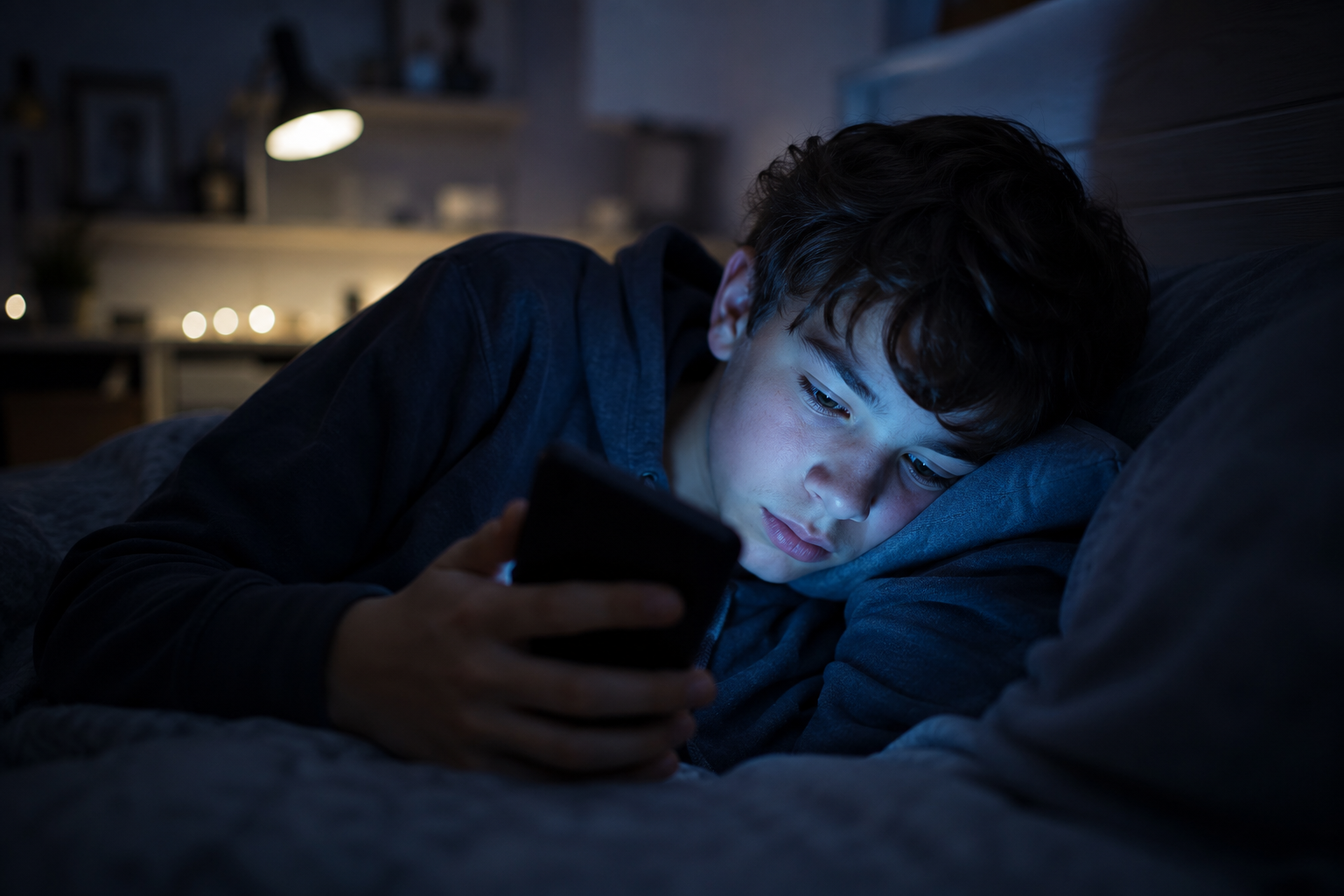
Technology Is Amazing. But Childhood Still Needs Childhood.
Every generation has its own challenges. For today's children, one of the biggest is growing up in a world where entertainment, friendships, education and even self-worth increasingly exist through a screen.
Smartphones, tablets and computers have become part of everyday life. They help children learn, stay connected and discover new interests. Used in moderation, technology can be an extraordinary educational tool.
Yet many parents are beginning to notice changes that don't always appear overnight. A child who once loved reading now spends every spare minute scrolling. Conversations become shorter. Eye contact slowly disappears. Family dinners become quieter. The phone is never far away.
Often these changes happen so gradually that families don't realise how much has shifted until everyday life starts feeling more difficult.
More Than Just "Too Much Screen Time"
Technology itself isn't the problem. The real concern is what excessive screen use may quietly replace. Hours once spent outdoors become hours indoors. Face-to-face conversations become messages. Imagination competes with an endless stream of short videos designed to capture attention every few seconds.
Many psychologists describe today's digital environment as one that constantly stimulates the brain's reward system. Every notification. Every like. Every new video. Every message. Each provides a small burst of dopamine — the neurotransmitter associated with motivation and reward. While this is a completely natural brain process, constant stimulation can make slower everyday activities such as reading, homework or even family conversations feel less engaging.
Emotional Wellbeing
The Growing Impact on Mental Health
Across Europe and around the world, healthcare professionals are seeing increasing numbers of children and teenagers struggling with anxiety, emotional regulation, loneliness and low mood.
Digital technology is not the sole cause of these difficulties. Mental health is shaped by many factors, including family circumstances, school pressure, individual temperament, friendships and wider social influences. However, prolonged and unbalanced screen use may intensify existing vulnerabilities.
Social media can place young people inside a constant cycle of comparison. They are exposed to carefully selected photographs, edited appearances and idealised versions of other people's lives. Over time, this can quietly affect confidence and create the feeling that everyone else is happier, more successful or more accepted.
A child may appear connected to hundreds of people online while still feeling deeply isolated in everyday life.

Changes Parents Often Notice First
The Warning Signs Are Often Quiet
The first signs are not always dramatic. A child may become less interested in hobbies, increasingly irritable when asked to stop using a device, more withdrawn from family life or unusually anxious about what is happening online. School performance may begin to decline, sleep may become disrupted and everyday conversations may feel more difficult.
Sleep and Recovery
Sleep Is Often the First Thing Technology Changes
One of the most overlooked consequences of excessive device use is poor sleep. Smartphones and tablets often remain close to children late into the evening, making it difficult for the brain to slow down.
The light emitted by screens may delay the body's natural release of melatonin, the hormone that helps prepare us for sleep. But the problem is not only the light itself. Messages, videos, games and social interactions keep the brain emotionally and mentally active at a time when it should be settling.
Children who use devices late at night may take longer to fall asleep, wake more frequently and feel less rested in the morning. Over time, this may affect mood, emotional regulation, memory and school performance.
Sleep is not simply a break from the day. It is when young brains process emotions, consolidate learning and support healthy development.
Attention and Learning
When Concentration Starts to Disappear
Many parents and teachers describe the same concern: children seem to find it increasingly difficult to stay focused on one activity for a sustained period of time.
Modern digital content is designed to move quickly. Short videos, constant notifications and endless streams of new information reward the brain for switching attention every few seconds.
Real learning works differently. Reading, writing, solving a difficult problem or listening carefully in class all require patience and sustained concentration. For a brain accustomed to constant novelty, slower tasks may begin to feel frustrating or unusually demanding.
This does not mean that screen use causes attention disorders. However, for children who already struggle with focus, excessive digital stimulation may make those difficulties more noticeable.
Mood
Emotional Regulation
Poor sleep and constant stimulation may contribute to irritability, restlessness and difficulty managing everyday emotions.
Learning
School Performance
Reduced concentration may make homework, reading and classroom learning feel harder than they once did.
Relationships
Social Withdrawal
Online interaction may gradually replace real conversations, family time and face-to-face friendships.

Physical Wellbeing
The Effects Are Not Only Emotional
The impact of prolonged screen use is not limited to mood, concentration or sleep. It can also affect the way children move, rest and experience the physical world around them.
Long periods spent sitting and looking down at a device may contribute to neck, shoulder and back discomfort. Some young people also experience tired eyes, blurred vision or headaches after extended periods of close-up screen use.
The greater concern is often what screen time replaces. Time spent online may gradually reduce the time available for movement, outdoor play, sport and ordinary physical exploration.
Childhood bodies are designed to move. Running, climbing, balancing and playing outdoors support physical strength, coordination, confidence and healthy development.
A Healthier Relationship With Technology
Finding Balance — Not Eliminating Technology
Technology is part of modern childhood, and removing it completely is neither realistic nor necessarily helpful. Children use digital tools to learn, communicate, express creativity and stay connected with the world around them.
The goal is not to make technology feel forbidden. The goal is to ensure that it does not quietly replace the experiences children need for healthy development: sleep, movement, conversation, imagination, real-world friendships and time with family.
Sustainable habits usually work better than sudden restrictions. Small, consistent changes can help the whole family create a more balanced digital environment.
Recognising When Support May Help
When Should Parents Speak With a Professional?
Enjoying games, videos or social media is not automatically a reason for concern. The important question is whether digital habits are beginning to interfere with a child’s everyday wellbeing.
Professional advice may be helpful when changes persist, become more intense or begin affecting family life, education, friendships, sleep or emotional health.
Asking for professional guidance does not mean that something is seriously wrong. Sometimes one conversation provides reassurance and practical direction. In other cases, it may identify a difficulty that would benefit from earlier support.
Supporting Families
How MedTrip Poland Can Help
At MedTrip Poland, we understand that every child and every family is different. Some parents are looking for reassurance. Others need quicker access to an experienced specialist or a second professional opinion.
We help Irish families explore access to trusted Polish healthcare specialists through online consultations and appointments in Poland, depending on the child’s individual circumstances and the availability of an appropriate medical professional.
Our role is to help families understand the available pathway, arrange the appropriate appointment and prepare for the consultation with greater clarity and confidence.
No obligation. Tell us what support you are looking for and our team will come back to you.
Evidence and Further Reading
References
This article provides a general overview based on recognised public-health and professional guidance. Digital media may offer both benefits and risks, and its effects can vary considerably between individual children.
- American Psychological Association — Health Advisory on Social Media Use in Adolescence
- American Academy of Pediatrics — Media Use in School-Aged Children and Adolescents
- World Health Organization — Guidelines on Physical Activity and Sedentary Behaviour
- World Health Organization — Guidelines on Physical Activity, Sedentary Behaviour and Sleep for Children Under Five
- UNICEF Innocenti — Childhood in a Digital World
This article is intended for general educational purposes and does not replace an individual assessment, diagnosis or treatment plan from a qualified healthcare professional. Seek appropriate medical advice if you are concerned about a child’s physical health, emotional wellbeing, behaviour, development or safety.


