
Step one
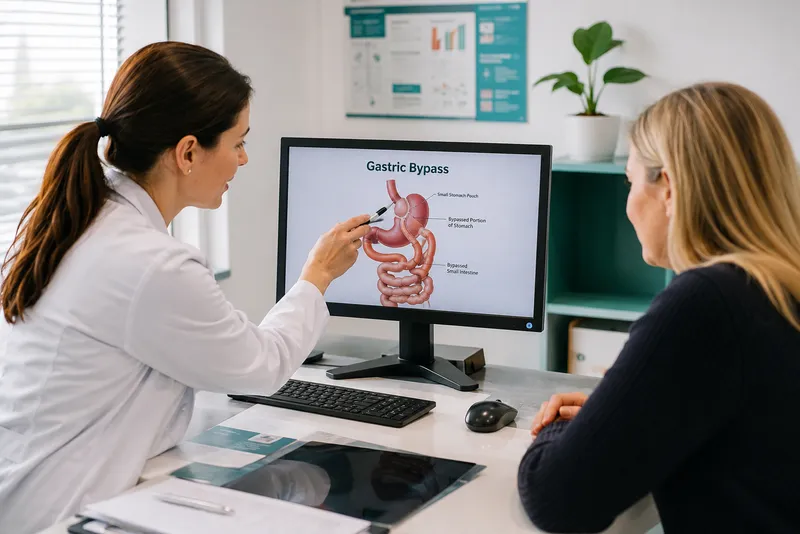
A small stomach pouch is created
The surgeon divides the upper part of the stomach to create a much smaller pouch. The remaining larger part of the stomach stays in the body but food no longer passes through it in the usual way.
Gastric bypass is an established bariatric procedure that combines a smaller stomach with a change in the digestive pathway to support substantial and long-term weight loss in suitable patients.

Eligible patients living in Ireland may receive private gastric bypass surgery in Poland and apply to the HSE for reimbursement under the EU Cross Border Directive.
The current HSE Cross Border Directive DRG guide specifically includes laparoscopic gastric bypass within the category K11B – Major Laparoscopic Bariatric Intervention, with a published inpatient tariff of €13,277.
The patient must meet the HSE Cross Border Directive requirements, including the appropriate Irish referral.
A bariatric specialist assesses suitability and determines which procedure is medically appropriate.
After treatment, the required medical and payment documentation is submitted to the HSE.
Tell us what treatment you are looking for and we can help you explore available clinics, appointments, prices and the HSE reimbursement process.
*€13,277 is the current published HSE inpatient tariff for the expected K11B DRG category covering major laparoscopic bariatric procedures, including laparoscopic gastric bypass. The actual reimbursement is determined by the HSE and depends on the treatment provided, final DRG classification, individual eligibility and the amount actually paid for eligible healthcare. Reimbursement is not guaranteed.
Roux-en-Y gastric bypass is a well-established form of metabolic and bariatric surgery. It reduces the amount of food the stomach can hold and also changes the route food takes through part of the small intestine.
The aim is not simply to make the stomach smaller. Gastric bypass can also influence appetite, fullness and the way the body responds to food, making it an important treatment option for selected patients living with obesity.
The surgeon divides the upper part of the stomach to create a much smaller pouch. The remaining larger part of the stomach stays in the body but food no longer passes through it in the usual way.
A section of the small intestine is connected to the new stomach pouch. Food therefore bypasses the larger stomach and the first part of the small intestine.
The operation combines restriction with changes in digestion and metabolic signalling. This can support substantial weight loss and may improve obesity-related medical conditions in suitable patients.
Gastric bypass combines a smaller stomach pouch with a rerouted digestive pathway. The operation is more complex than sleeve gastrectomy and requires structured long-term nutritional and medical follow-up.
The newly created stomach pouch holds considerably less food, helping patients feel satisfied after smaller meals.
Food travels from the new pouch into a lower section of the small intestine, bypassing the first part of the normal digestive route.
Changes in gastrointestinal hormones can influence appetite, fullness and metabolic responses after surgery.
Because food bypasses part of the small intestine, vitamin, mineral and nutritional monitoring remains essential after surgery.
Gastric bypass and sleeve gastrectomy are different procedures. Your surgeon and bariatric team should assess which option is most appropriate based on your health, medical history, eating patterns, weight-loss goals and other clinical factors.
Both procedures reduce stomach capacity, but they do so in different ways. Gastric bypass also reroutes part of the small intestine, whereas sleeve gastrectomy normally leaves the intestinal pathway unchanged.
| Feature | Gastric bypass | Sleeve gastrectomy |
|---|---|---|
| Stomach | A small stomach pouch is created and the remaining stomach is bypassed. | A large portion of the stomach is permanently removed, leaving a narrow sleeve. |
| Small intestine | Part of the small intestine is bypassed and the food pathway is changed. | The intestine is normally not rerouted. |
| Surgical complexity | More technically complex because both the stomach and intestine are altered. | Generally anatomically simpler because there is no intestinal bypass. |
| Nutritional follow-up | Particularly important because reduced absorption can contribute to vitamin and mineral deficiencies. | Long-term nutritional follow-up is also required, although there is no intestinal bypass. |
| Choosing the procedure | The most appropriate operation should be decided after individual assessment by an experienced bariatric team. | |
Already considering gastric sleeve surgery? Read our Sleeve Gastrectomy in Poland for Irish Patients guide to compare the two procedures in more detail.
Suitability is determined individually by the bariatric team. According to current HSE information, bariatric surgery may be considered for people with a BMI of 40 or above, or a BMI between 35 and 40 when obesity-related medical problems are also present.
The assessment also considers whether surgery and anaesthesia are safe for you and whether you are able to commit to the long-term follow-up required after treatment.
Important: medical suitability for bariatric surgery and eligibility for reimbursement under the HSE Cross Border Directive are two separate assessments. Meeting surgical BMI criteria does not by itself guarantee HSE reimbursement.

HSE guidance states that patients can usually leave hospital 1 to 3 days after bariatric surgery. Your actual hospital stay will depend on your operation, recovery and the recommendation of your treating team.
After gastric bypass, eating is reintroduced gradually and patients need to follow a structured nutritional plan. Regular blood tests, vitamin and mineral supplementation and ongoing clinical follow-up are important over the long term.
Gastric bypass is major surgery. As with any operation, there are potential complications, and the altered digestive pathway creates specific long-term nutritional considerations.
Reduced absorption can increase the risk of deficiencies, including iron, calcium and certain vitamins. Regular monitoring is important.
Some patients may experience unpleasant symptoms after foods or drinks that are high in sugar, particularly when eaten quickly.
Gastric bypass carries risks including ulcers and complications involving the small bowel, which should be discussed with your surgeon.
Long-term monitoring, nutritional guidance and adherence to your recommended supplement plan remain an important part of care.
For patients considering treatment under the HSE Cross Border Directive, it is important to follow the correct referral and consultation process before surgery.
Obtain the appropriate referral before the consultation that forms part of the Cross Border Directive pathway.
The bariatric specialist reviews your medical history and decides whether gastric bypass or another treatment is appropriate.
You receive your treatment in Poland and pay the healthcare provider directly.
After treatment, the relevant healthcare, medical and payment documentation is submitted as part of the reimbursement claim.
For inpatient treatment such as gastric bypass, HSE states that the outpatient consultation required before admission must be in person. Patients planning inpatient or day-case treatment may also apply for optional Prior Notification, which can confirm eligibility and provide an indication of the potential reimbursement before treatment.
It may qualify where the patient meets the Cross Border Directive requirements and the treatment corresponds to healthcare available to public patients in Ireland. The final reimbursement is decided by the HSE.
Yes. The Cross Border Directive referral requirements must be met. HSE accepts referrals from a GP or a consultant whom you see as a public patient.
For inpatient treatment, HSE states that the outpatient consultation before admission must take place in person. Gastric bypass would normally involve inpatient treatment.
Prior Notification is optional for inpatient or day-case treatment. It can confirm whether you are eligible to apply and provide an indication of how much you may receive. The exact amount is confirmed only after treatment.
Neither procedure is automatically better for every patient. They work differently and the most suitable operation depends on your medical history, health and individual bariatric assessment.
HSE guidance states that patients can usually leave hospital 1 to 3 days after bariatric surgery, but your actual stay depends on your operation and recovery.
Long-term vitamin and mineral supplementation and regular blood tests are an important part of care after gastric bypass because the operation alters nutrient absorption.
There is no single safe flying date for every patient. Your treating surgeon should decide when you are medically fit to travel based on your recovery and individual risk factors.
Tell us about the treatment you are looking for. We can help you explore suitable clinics, consultation dates, treatment costs and the practical steps involved in the HSE Cross Border Directive.
Send an Enquiry

